
A Crisis Dressed as a Plan
There is a particular kind of governance failure that doesn't announce itself as failure. It arrives dressed in urgency — in press releases about "proactive measures" and "pre-disposition activities" — and by the time the public understands what has happened, the damage is already done and irreversible.
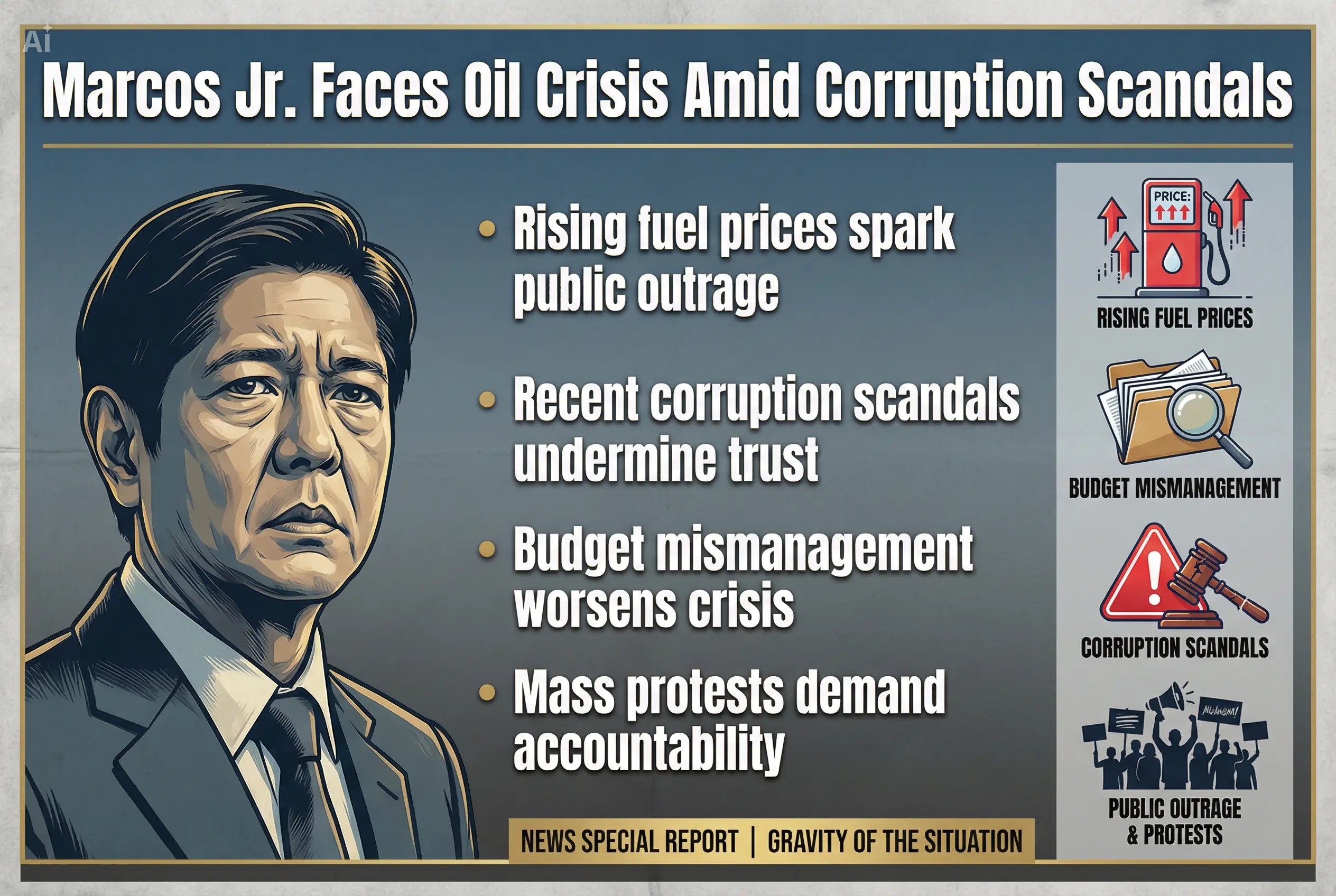
That appears to be exactly what is unfolding right now under the Marcos administration's response to the Philippine oil crisis.
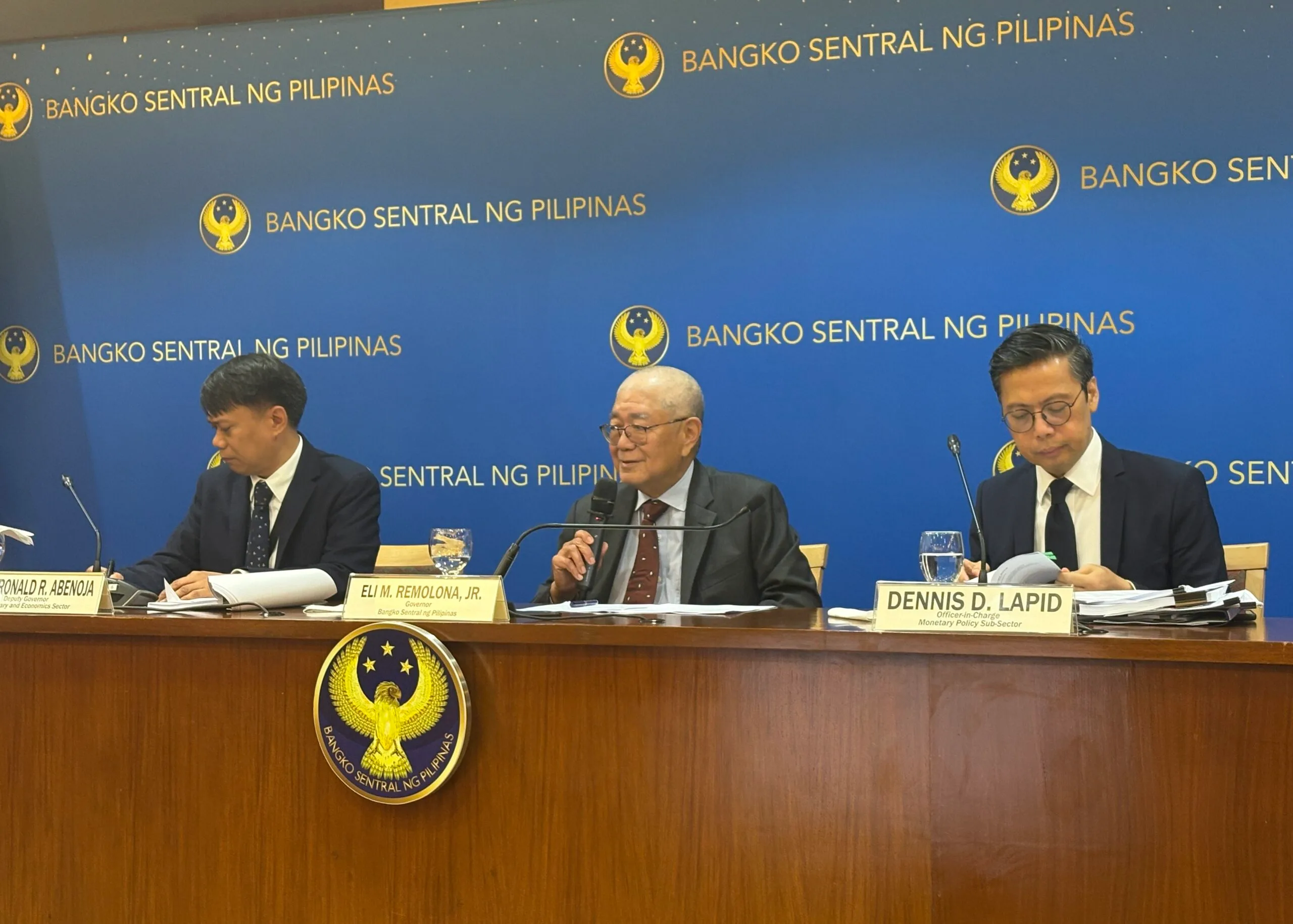
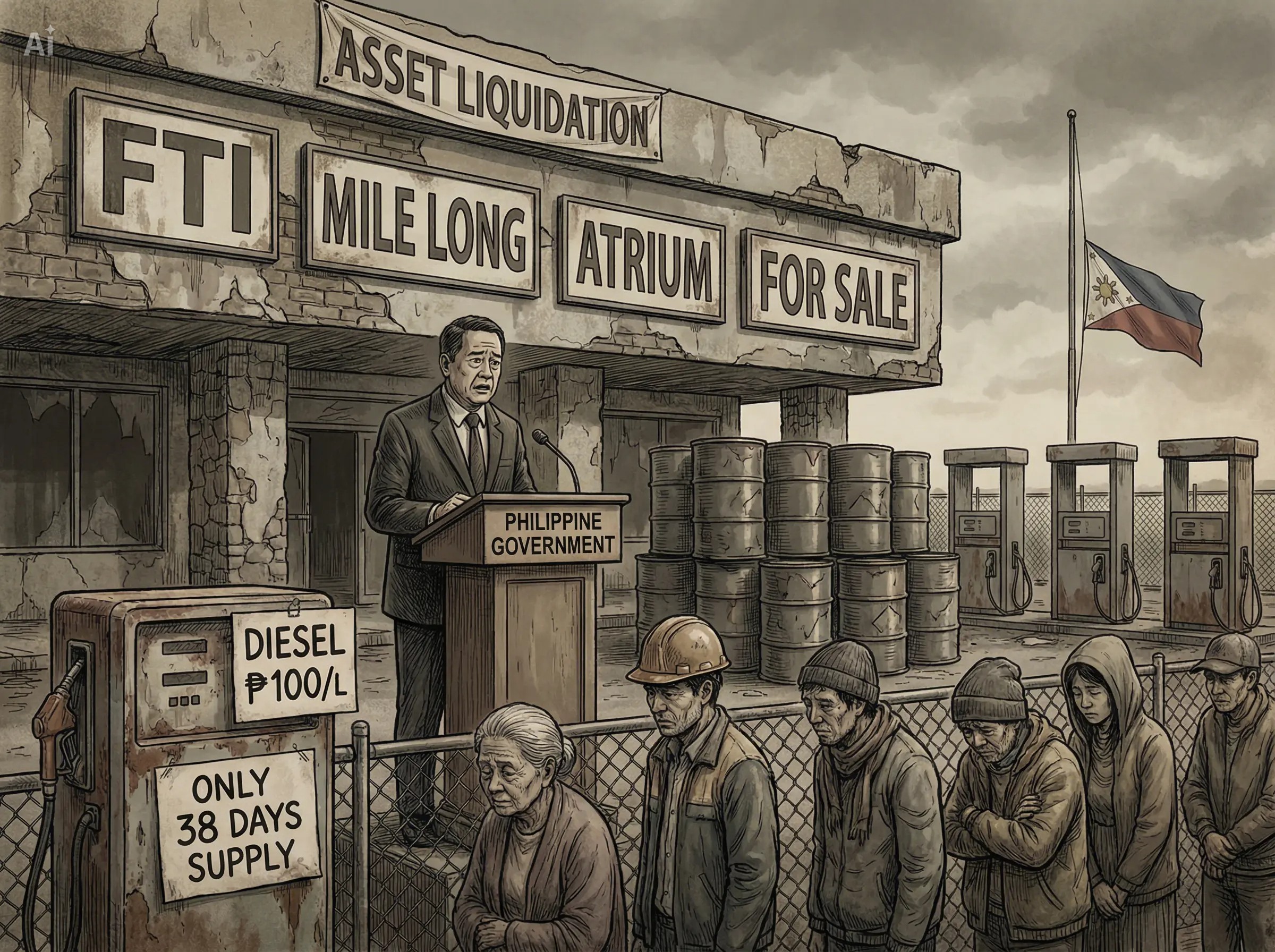
With national fuel reserves having collapsed from roughly two months of supply to just 38 days — and diesel prices now breaching ₱100 per liter, more than double pre-crisis levels — the Department of Finance has announced it is rushing the sale of some of the country's most valuable public assets: the Atrium of Makati, the Mile Long Complex, and a major portion of the Food Terminal Inc. (FTI) estate in Taguig. The stated reason? To fund an "oil buffer stock" — a strategic reserve the government should have been building years ago.
Let that sink in. The Marcos administration is selling irreplaceable prime real estate — assets that belong to the Filipino people — to pay for emergency fuel procurement that a properly managed government would have had in place long before a crisis hit.
A Crisis That Didn't Have to Be This Bad
The trigger for the current oil crunch was external: the death of Iranian Supreme Leader Ayatollah Ali Khamenei in February and the cascade of retaliatory strikes that followed have threatened the Strait of Hormuz, through which 25 percent of global seaborne oil passes. The Philippines, which sources nearly 98 percent of its crude oil from the Middle East, was always going to feel this. No one disputes that.
But the severity of what Filipinos are experiencing right now is not solely the product of geopolitics. It is the product of a government that failed to maintain adequate strategic reserves even as warning signs accumulated. The country's fuel buffer had already eroded from nearly two months to 38 days before this crisis fully materialized. That erosion didn't happen overnight. It happened while officials were busy with other things.
When Marcos said — apparently without embarrassment — "kahit na may stock tayo, naghahanap tayo ng alternative sources ng langis," he was essentially admitting that whatever stock existed was not enough. The question no one in the Palace seems to want to answer is: why wasn't it enough, and who was responsible for letting it get that way?
Who Benefits From the Sell-Off?
The government has targeted three assets for rapid disposal this year: FTI in Taguig, estimated at ₱40.4 billion; Mile Long Complex in Makati at ₱12.26 billion; and Atrium units at roughly ₱449.6 million. Total target for all government asset sales in 2026: ₱101 billion.
Already, Ayala Land Inc. has publicly signaled interest in FTI and Atrium — entirely unsurprisingly, given their existing footprint in both areas. This is how Philippine privatization has always worked: the government sells; the big conglomerates buy. The assets pass from public hands into the portfolios of the country's wealthiest families, and the government gets a one-time cash infusion it will spend and never recover.
To be clear: privatization is not inherently wrong. The Philippines has done it before, under Aquino and Ramos, and some of it produced real gains — PLDT's privatization, for instance, transformed telecommunications. But those were cases where the government divested from enterprises it had no business running. What is happening now is different. FTI, Mile Long, and Atrium are prime land assets in Metro Manila's most valuable corridors. Once sold, they are gone forever. No future administration can buy them back at these prices. The Filipino public will never again benefit from their appreciation.
And they are being sold not to fund long-term development, not to reduce structural debt, but to buy fuel. Emergency fuel. Because the government didn't have enough saved up.
The Burden Isn't Being Shared
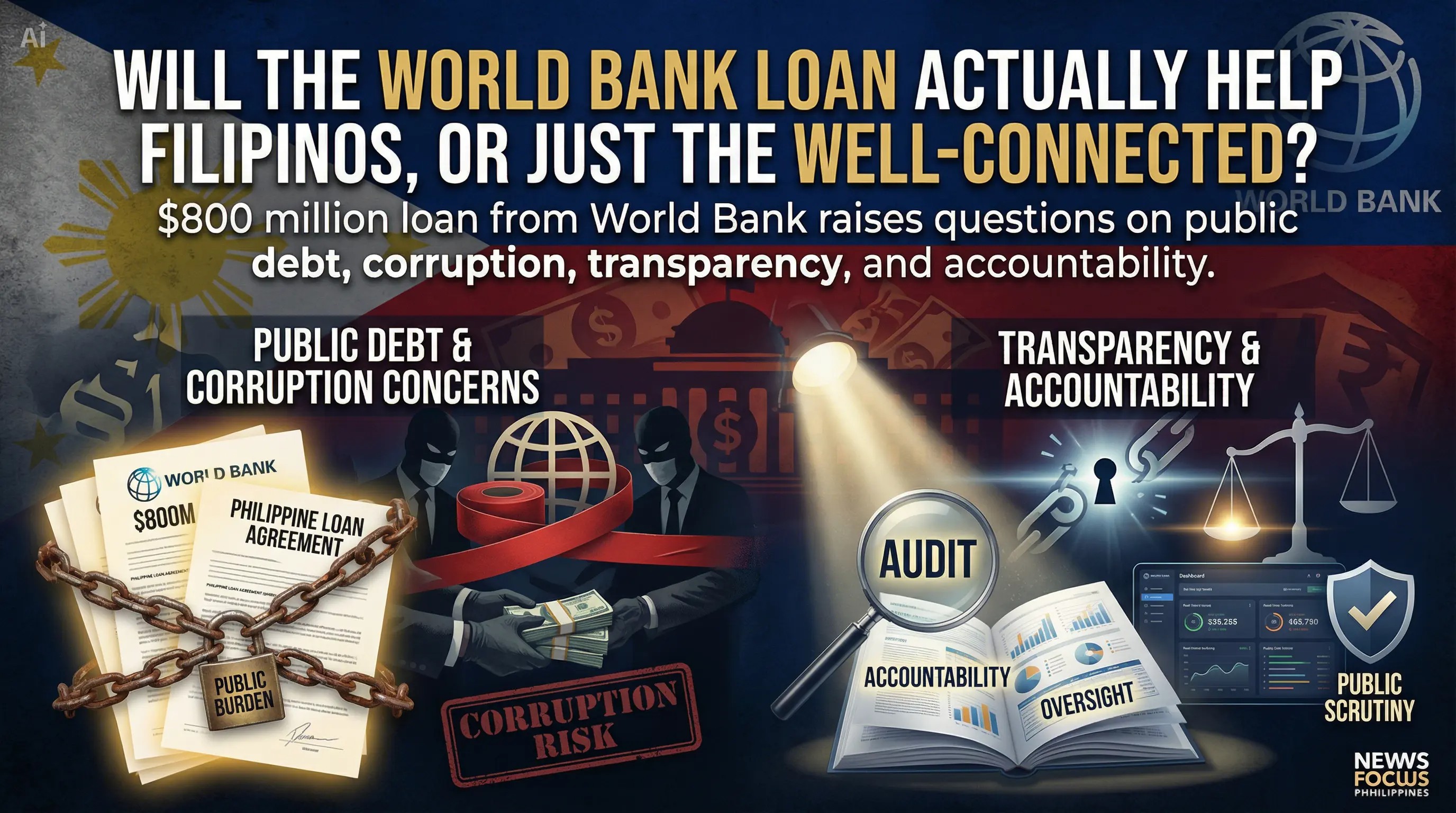
While the administration rushes to liquidate public wealth, it has been far less aggressive about protecting ordinary Filipinos from the crisis's impact. Critics — including former ACT Teachers Representative France Castro and the Ibon Foundation — have pointed out that the government's response has largely shielded oil companies and large corporations while leaving the cost burden on working-class and poor Filipinos.
The Senate did authorize Marcos to suspend excise taxes on petroleum products, which is the right move. But advocacy groups have raised legitimate questions about whether those savings actually reach consumers at the pump, or whether they are absorbed by oil companies as margin. The administration's answer has been to point to fuel subsidies and a four-day government work week as its major relief measures — responses that many economists have called woefully inadequate given the scale of the disruption.
DLSU economists have warned of inflation-driven slowdowns. Ateneo's Leonardo Lanzona has called the government's fiscal approach "not a strategy at all." And yet the Palace continues to frame its response as decisive and comprehensive.
The Bigger Picture
There is a pattern here that should concern every Filipino voter. The Marcos administration has consistently treated public assets as a piggy bank to be broken open whenever fiscal pressures become politically uncomfortable — rather than building the kinds of institutional buffers and strategic reserves that would allow the country to absorb shocks without desperate fire sales.
The Philippines is not a poor country in terms of assets. It is a country that has historically been poor at protecting those assets from short-term political pressures. Every administration that has sold crown jewels to plug holes in the budget has left the next generation with fewer resources and fewer options.
What makes the current moment particularly frustrating is that the oil crisis — while externally triggered — was entirely foreseeable as a risk. The Middle East has been volatile for decades. The Philippines' near-total dependence on that region for crude oil has been a known vulnerability for just as long. A government serious about energy security would have diversified supply chains, built strategic reserves, and developed a crisis playbook years before it was needed.
Instead, we are watching the government sell the Atrium of Makati to buy diesel.
The urgency is real. The crisis is real. But urgency does not excuse the choices that created this vulnerability, and it does not justify permanently liquidating public wealth to compensate for years of inadequate preparation.
Filipinos deserve a government that manages for the long term — not one that sells tomorrow to survive today.
Sources: BusinessWorld, Philippine Daily Inquirer, Manila Bulletin, ABS-CBN News, Rappler, The Tribune, Philstar, Presidential Communications Office