


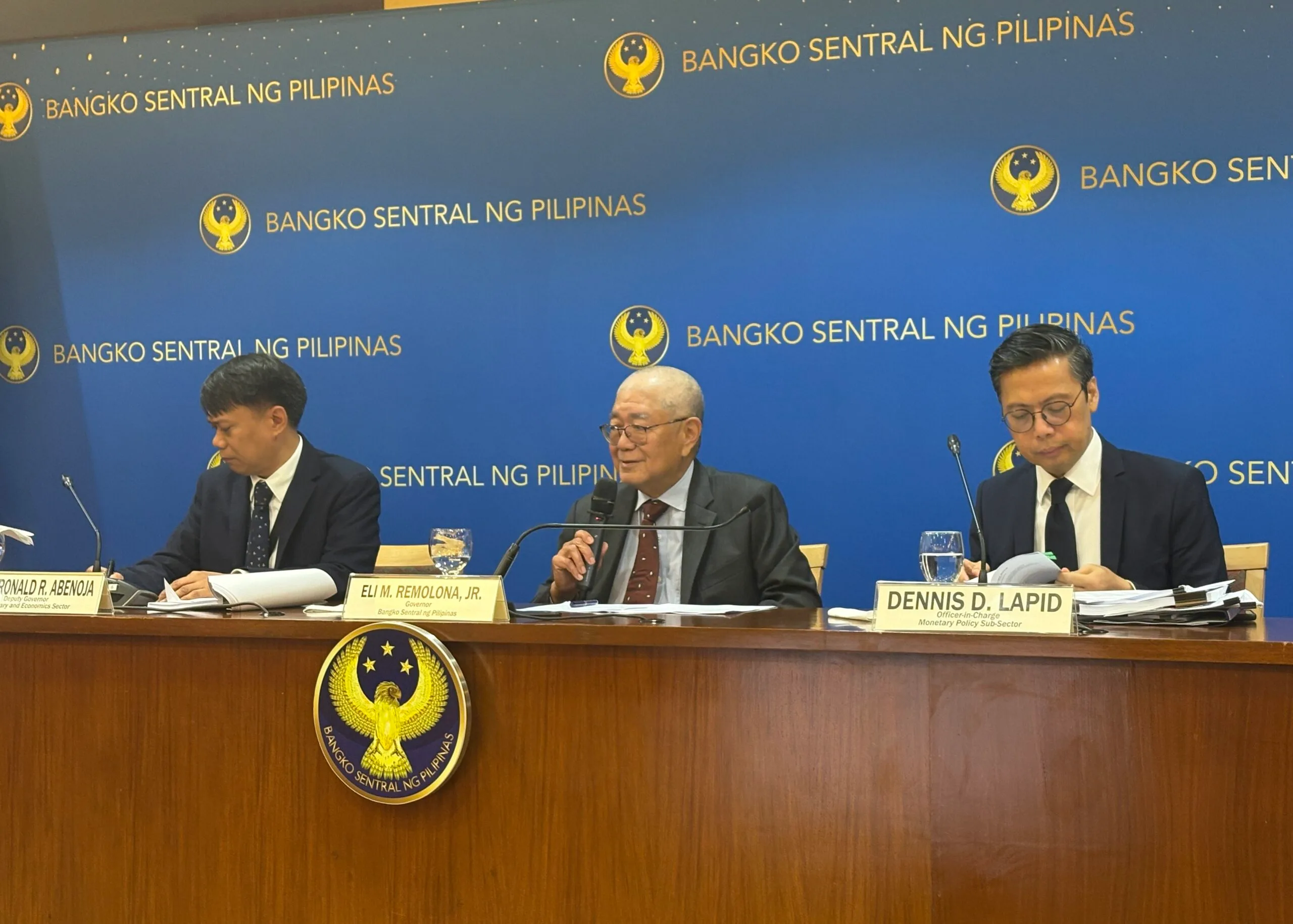
MANILA — The Bangko Sentral ng Pilipinas (BSP) cut its benchmark interest rate by 25 basis points to 4.25 percent on Thursday, February 19, marking the sixth consecutive reduction and bringing the policy rate to its lowest level since August 2022 — as the country's central bank moved to cushion an economy that has been recovering far more slowly than officials had anticipated.
The decision, made at the Monetary Board's first policy meeting of 2026, was widely expected. All 13 economists polled by the Philippine Daily Inquirer predicted the move, and 25 of 27 analysts surveyed by LSEG had also anticipated the cut. Still, the circumstances surrounding it were anything but routine.
"Economic growth has undershot the BSP's expectations due to weaker domestic demand," the central bank said in a statement. "Latest indicators point to a recovery in the second half of the year, but growth will depend largely on how quickly confidence recovers."
The Scandal Behind the Slowdown
The rate cut comes in the long shadow of the flood control corruption scandal that erupted in 2024. Extensive flooding across the country exposed a trail of faulty, substandard, and in some cases entirely nonexistent flood control infrastructure projects — uncovering a web of kickbacks involving Department of Public Works and Highways officials, lawmakers, and private contractors. The fallout gutted government spending, rattled investor sentiment, and sent economic growth into a sharp decline.
In the fourth quarter of 2025, the Philippine economy grew by just 3.0 percent year-on-year — its worst performance in 16 years outside of the pandemic period, and weaker even than the already-disappointing 3.9 percent recorded in the third quarter. Full-year 2025 GDP growth came in at a post-pandemic low of 4.4 percent, falling well short of the Marcos administration's target of 5.5 to 6.5 percent.
BSP Governor Eli Remolona Jr. acknowledged during a press briefing that the central bank had underestimated how severely the scandal would erode confidence. "When the flood control scandal broke out, we recalibrated our models to take account of confidence. I think the recalibration wasn't enough to anticipate what actually happened in Q4. So now, we have some further work to do, and we now realize that it's a bigger factor than we thought," he said.
Monetary Policy in Uncertain Terrain
Thursday's cut brings total BSP rate reductions since the start of its easing cycle in August 2024 to 225 basis points — the most aggressive monetary easing among its regional peers. Yet the economy has yet to respond with the vigor officials had hoped for.
Remolona was candid about the limits of what lower borrowing costs can achieve on their own. "Our decision today may actually help to restore confidence, boosting investment and consumption. The pace of economic recovery will depend on how quickly confidence returns," he said. The governor added that the monetary policy outlook has become "less certain," cautioning: "To the extent we can support growth without causing inflation, we will support growth."
Inflation, for now, remains manageable. Consumer prices rose 2.0 percent in January 2026 — the fastest pace in 11 months — but still sit at the lower end of the BSP's 2 to 4 percent target range. The central bank forecasts headline inflation to average 3.2 percent in 2026 before easing to 3.0 percent in 2027, remaining within its target band throughout.
The BSP now projects the economy to grow by 4.6 percent in 2026, improving from 2025's disappointing outing but still below the Marcos administration's 5 to 6 percent goal for the year. A more meaningful recovery to around 5.9 percent is not expected until 2027, when the BSP believes the economy will approach its potential — assuming confidence returns.
Market Reaction and What Comes Next
Analysts were divided on whether Thursday's move marks the end of the easing cycle or whether more cuts could follow. Some economists at Pantheon Macroeconomics believe 4.25 percent will be the terminal rate, arguing that rising inflation throughout the year will limit further room to maneuver. Others, including Capital Economics, left the door open. "With the economy set to remain weak amid the ongoing corruption scandal and inflation low, we think there will be at least one more 25-basis-point cut in the coming months," said Capital Economics analyst Gareth Leather.
The peso's position was also on traders' radar. MUFG Global Markets Research noted that the widely expected rate cut risks diminishing the Philippine peso's carry appeal, leaving the currency potentially vulnerable if dollar strength re-emerges in the global market.
After Thursday's decision, the BSP's Monetary Board is scheduled to hold five more rate-setting meetings this year: April 23, June 18, August 27, October 22, and December 17. Each meeting will be watched closely for signals on whether the central bank believes confidence — and growth — is finally returning.
Remolona offered a cautiously optimistic note, citing "tentative signs" of improvement in soft data measuring consumer and business sentiment. "Confidence may return within a few months," he said. For an economy bruised by scandal and sluggish growth, however, many Filipinos are hoping it arrives sooner.