
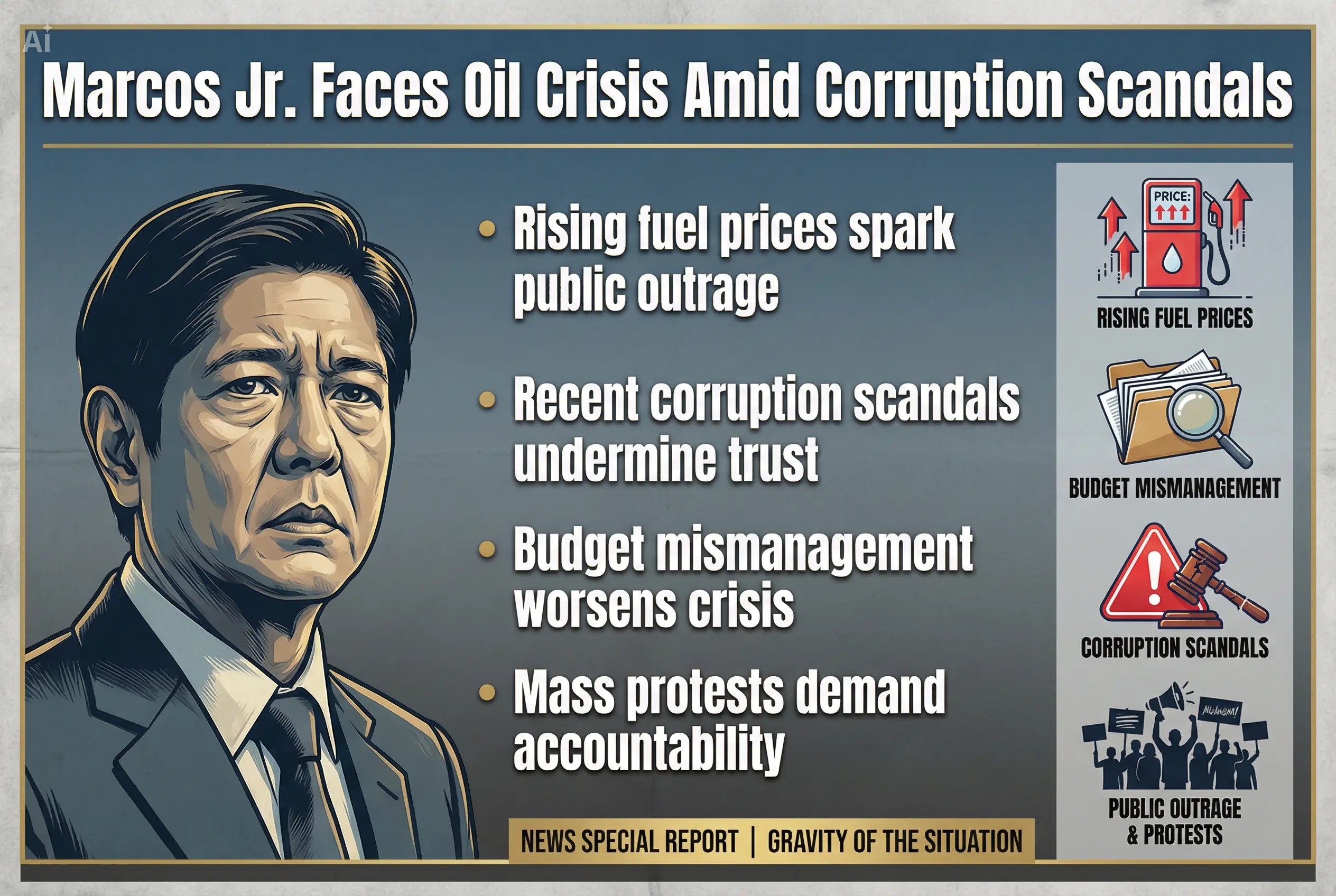
"Hindi natin kontrolado ang digmaan. Pero kontrolado natin kung paano natin poprotektahan ang Pilipino."
We cannot control the war. But we can control how we protect Filipinos.
It was a clean line. Presidential, even. President Ferdinand Marcos Jr. delivered it with the practiced ease of a man who has spent his entire life standing at podiums. And in a vacuum, stripped of context and history, it might have landed as reassurance.
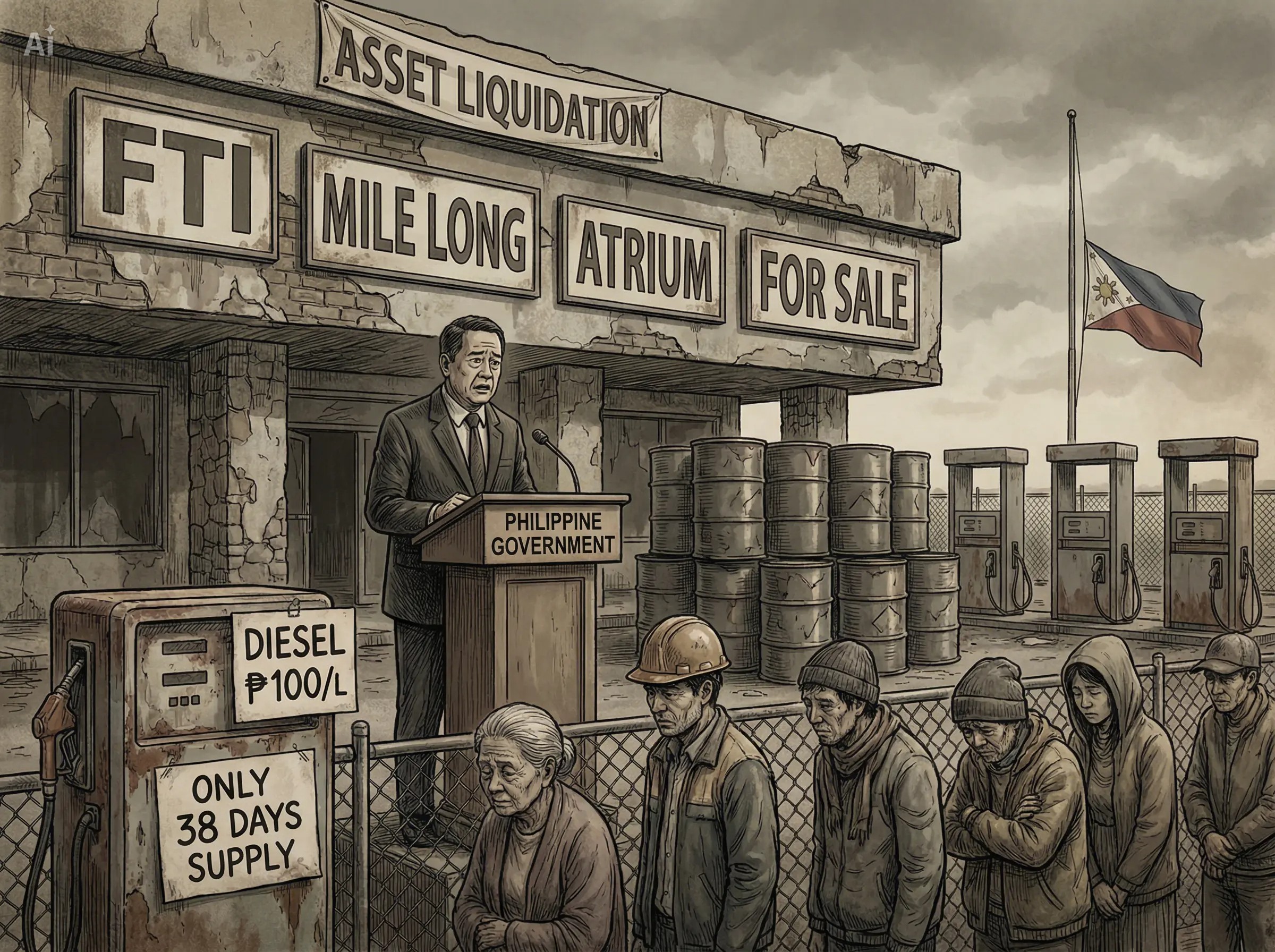
But Filipinos do not live in a vacuum. They live in a country where diesel just jumped by ₱17 per liter. Where gasoline is up ₱7.48. Where kerosene — the fuel of the poorest households — rose by ₱32.35 in a single week. They live in a country where, over the past three years, the man at that podium presided over what investigators have called the most corrupt national budget in the post-Marcos era. Where his own son, Representative Sandro Marcos, was named the single largest recipient of "allocable" pork barrel funds in Congress — ₱15.8 billion. Where his cousin, former House Speaker Martin Romualdez, allegedly received ₱1.68 billion in cash kickbacks delivered in luggage to his home.
Against that backdrop, "we will protect the Filipino" doesn't land as reassurance. It lands as irony — painful, heavy, and very familiar.
A Crisis Not of His Making — and a Response That Exposes Everything
To be fair to Marcos, the oil crisis is not his fault. The Iran-Israel-US war that broke out on February 28 disrupted the Strait of Hormuz — the chokepoint through which a fifth of the world's oil supply passes. The Philippines, which imports most of its crude from the Middle East and still relies on oil-fired power plants, is especially vulnerable. Price spikes of this magnitude were always going to be the unavoidable consequence of a war the Philippines had no hand in starting.
His administration has responded with a predictable toolkit: a four-day government workweek to cut fuel consumption, ₱5,000 cash relief for tricycle and jeepney drivers, fuel subsidies for farmers and fisherfolk, a push to suspend fuel excise taxes, and a ₱21.47 billion fund release to cushion the economic blow. He has directed agencies to cut power and fuel consumption by 10 to 20 percent. He is seeking alternative oil suppliers. He has certified biofuel legislation as urgent.
None of these measures are trivial. But none of them address the deeper problem that makes every crisis under this administration harder to weather: the government meant to protect the people has, for three years, been systematically looting them.
The Numbers the Palace Cannot Explain
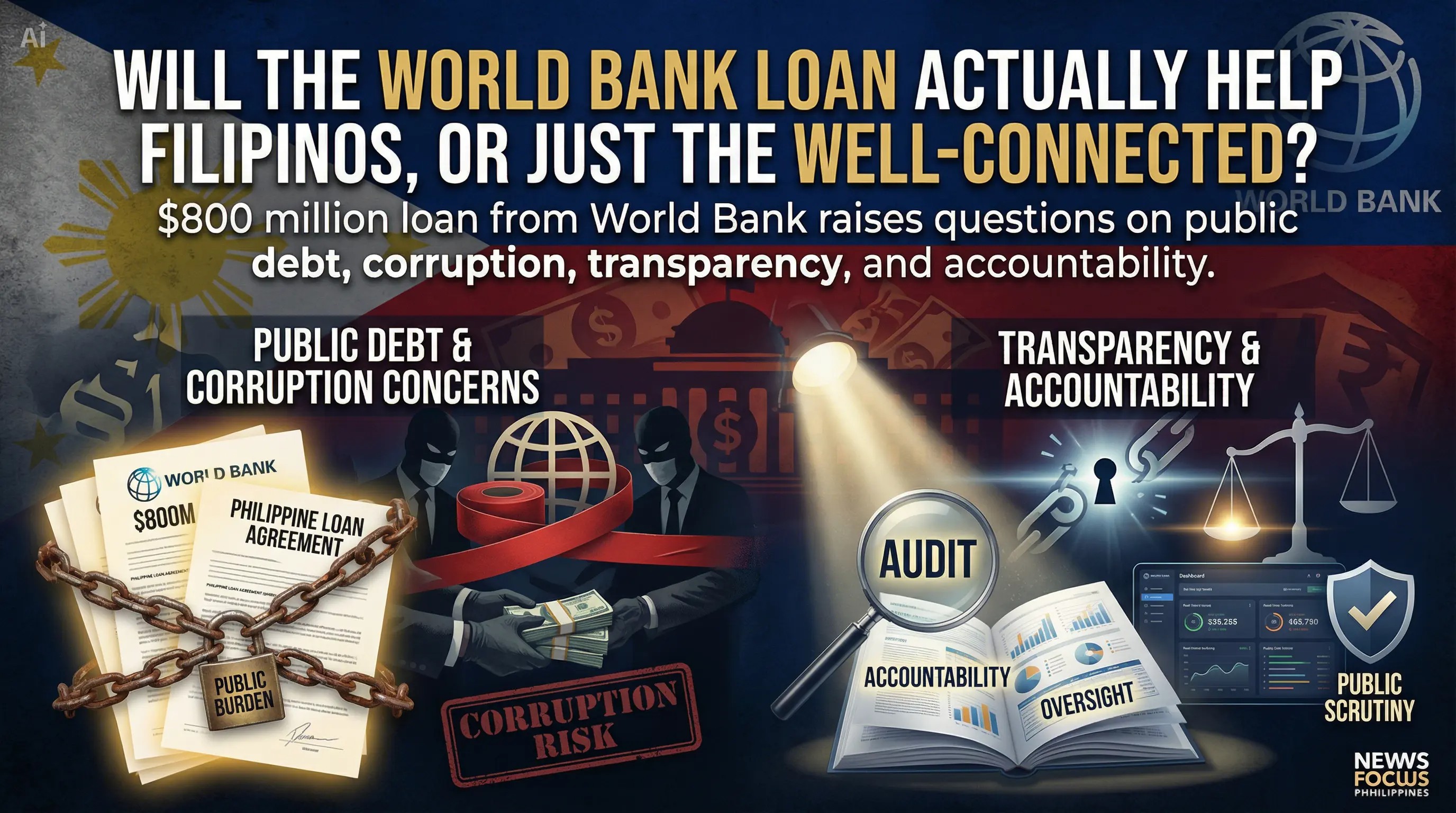
The flood control scandal — which exploded in mid-2025 and has never been resolved — remains the defining corruption story of the Marcos presidency. From 2023 to 2025, flood control budgets in Marcos's home province of Ilocos Norte jumped from ₱463 million to ₱8.72 billion. In Romualdez's Leyte, they rose from ₱2.17 billion to ₱10.06 billion. Billions in contracts flowed to a small circle of favored companies.
A contractor named Zaldy Co, before fleeing the country, testified that he regularly delivered cash-filled luggage to Romualdez's residence — an estimated ₱1.68 billion in total. In subsequent videos posted from abroad, Co went further: he alleged that budget insertions were made at the direction of the president's executive secretary and budget secretary, and that kickbacks reached Malacañang itself.
The Palace denied everything and questioned Co's credibility. The cases remain unresolved. No senior official has been jailed. Marcos had promised that corrupt officials would "spend Christmas in jail." Christmas came and went.
This is the governance infrastructure through which oil price relief — cash transfers, subsidies, fund releases — must now flow. Filipinos are being asked to trust that the ₱21.47 billion released today will reach the drivers and farmers it is meant for, and not the contractors and politicians it historically has.
Too Weak to Control What He Inherited
There is a particular tragedy in Marcos Jr.'s presidency that distinguishes it from simple corruption. He is not, by all accounts, a calculating plunderer in the mold of his father. He is something arguably worse for a president to be: a man too weak to govern the system he nominally leads.
His father understood this about him. In a 1972 diary entry, Ferdinand Marcos Sr. wrote of his son: "Bongbong is our principal worry. He is too carefree and lazy... The boy must realise his weakness — the carefree wayward ways that may have been bred in him." Half a century later, his son sits in Malacañang, and his father's worry has become the nation's burden.
The flood control scandal did not happen because Marcos ordered it. It happened, in large part, because he didn't stop it — because the allies surrounding him, including his own family, treated the national budget as their personal revenue stream, and he either did not know or did not act. He raised the issue himself in his 2025 State of the Nation Address, likely calculating it would give him political cover. Instead, it unraveled toward him.
A genuinely strong president would have used the machinery of state to make examples. Would have moved quickly, publicly, decisively. Would have understood that the appearance of accountability is itself a political asset worth protecting. Marcos did none of these things. He shuffled his Cabinet. He issued statements. He certified bills as urgent. And the people who allegedly looted billions remain largely free, largely powerful, and in some cases still receiving government allocations.
The People in the Streets Already Know
The anti-corruption protests of 2025 were the largest in the Philippines since 2013. A second wave came on November 30. A third wave fell on February 25, 2026 — deliberately timed with the 40th anniversary of the People Power Revolution that sent his father into exile. The symbolism was unmistakable. The message was direct: this family has not changed.
Now, with fuel prices at historic highs and household budgets collapsing, those same people are watching a president who could not protect their money ask them to trust that he will protect them from a war. The labor group Kilusang Mayo Uno is calling for him to invoke emergency powers and temporarily take over the oil industry. The Makabayan bloc says the deregulation law has failed. The streets are restless again — not just over fuel, but over the accumulated weight of a presidency that has asked too much and delivered too little.
What Protection Actually Looks Like
Real protection — the kind Marcos invokes but cannot deliver — would look like this: a government whose budget was not looted, so that the reserves needed to cushion a global shock actually exist. An Ombudsman that moves at the speed of public outrage, not the speed of political convenience. A president whose net trust rating had not already collapsed into negative territory before the crisis even began.
Instead, Filipinos get cash transfers that will arrive late, if at all. Subsidies distributed through a political infrastructure that has already proven it cannot be trusted. Reassurances from a man whose own father doubted him, whose allies robbed the treasury, and who seems genuinely surprised, each time, that the system he failed to reform has failed the people it was meant to serve.
"Walang iwanan," Marcos said. Nobody left behind.
The people in the streets are not asking to be left behind. They are asking, with growing fury, why they keep being robbed — and why the man promising to protect them is the same man who let it happen.
That is not a question the Palace has answered. It is not clear it knows how.