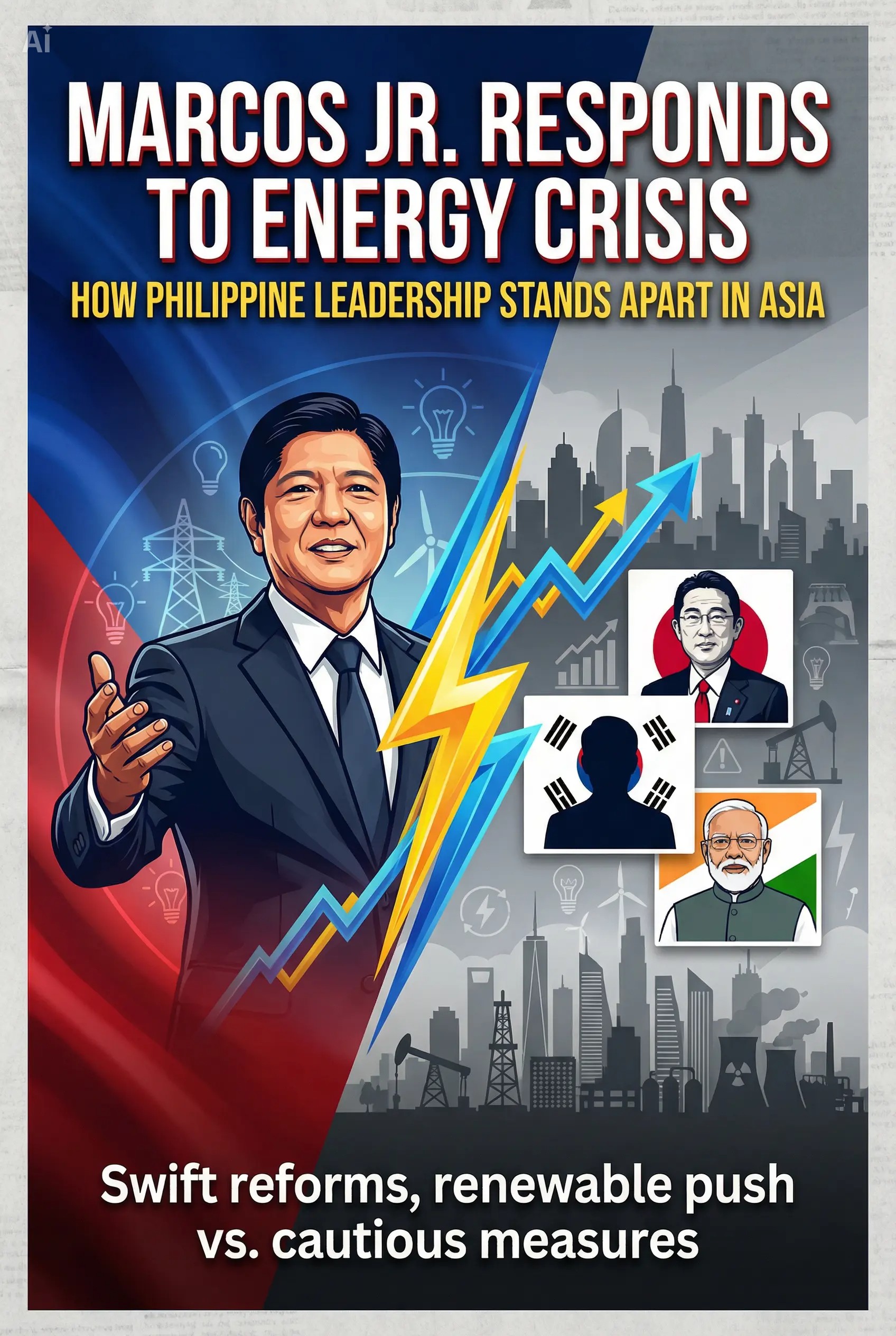

On March 23, 2026, Presidential Communications Office Undersecretary Claire Castro stood before the press and said plainly that the Philippines was not in an oil crisis. The country was experiencing a "price disruption," she said, caused by the Middle East conflict. Supply was sufficient. There was no need to panic.
Twenty-four hours later, President Ferdinand Marcos Jr. signed Executive Order 110, placing the entire country under a State of National Energy Emergency.
No correction was issued. No acknowledgment that the Palace's own spokesperson had just told the Filipino public the opposite of what the President was about to declare. The administration simply moved on, as if the contradiction had never happened.
It did happen. And it matters.
What Castro Actually Said
Castro's March 23 statement was not a casual aside. It was a deliberate, coordinated message. Energy Secretary Sharon Garin echoed the same framing that same day, saying the Philippines faced a "price disruption" rather than a supply crisis, and that fuel stocks remained adequate. The Palace was clearly aligned on the messaging: do not call this a crisis.
The reasons for that framing are not hard to understand. Declaring an energy emergency carries political weight. It is an admission that something has gone seriously wrong, and that the government needs extraordinary powers to respond. A declaration also invites scrutiny — of preparation, of stockpiles, of whether the warning signs were ignored.
So instead, the Palace offered reassurance. Price disruption. Sufficient supply. Nothing to see here.
One day later, the President signed an emergency order that will remain in force for a full year.
The Pattern Behind the Contradiction
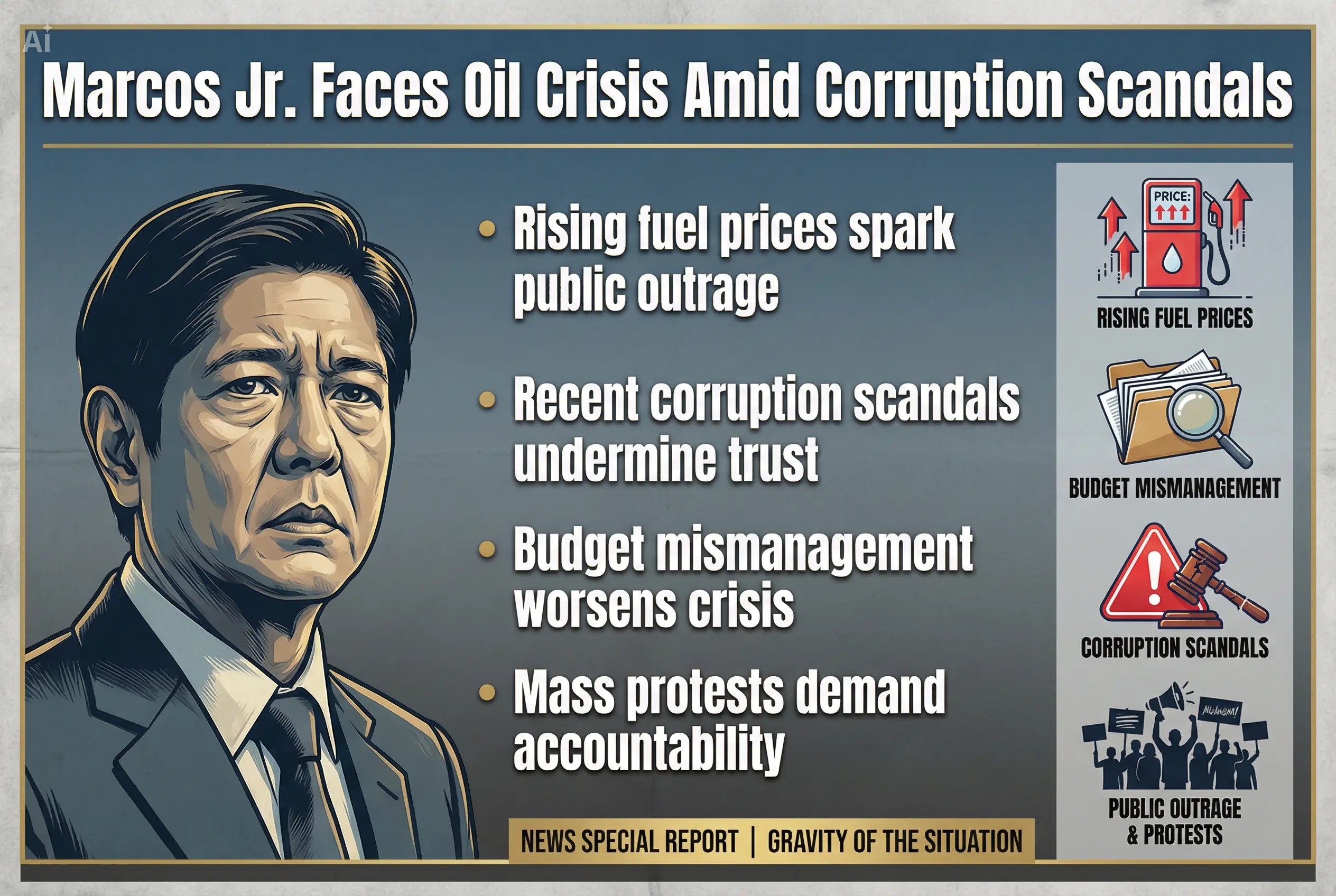
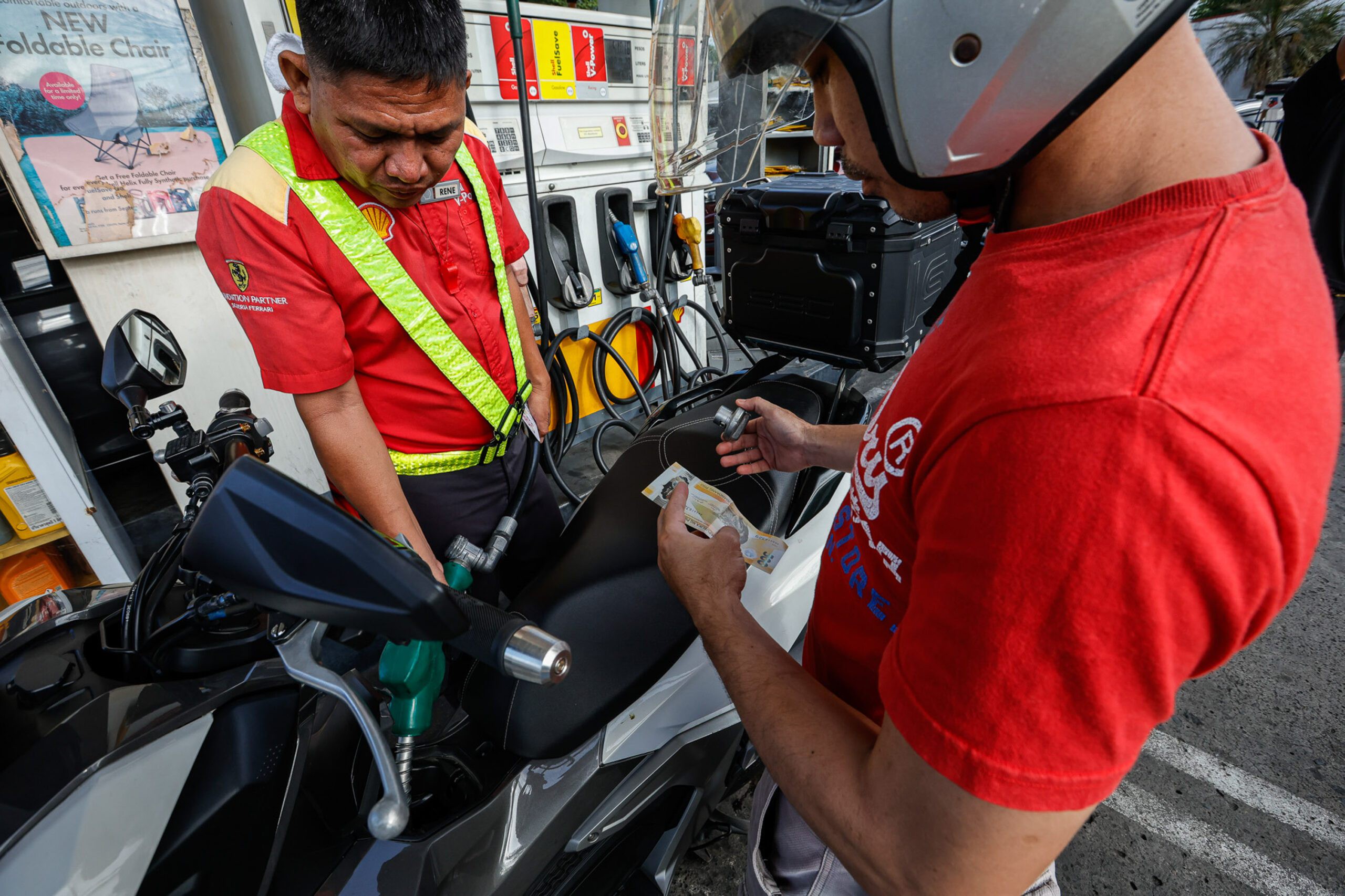
This was not an isolated stumble. By the time Castro made her "no crisis" statement, fuel prices had already been climbing for weeks. Diesel had surged past ₱90 per liter at many stations. The peso had hit a historic low of ₱60.10 against the dollar. The DOE had already quietly formed a crisis committee.
Marcos had already ordered the formation of that crisis committee even as his Palace insisted no crisis existed. The government was, in other words, simultaneously telling the public there was no emergency and preparing for one.
When EO 110 was finally signed, Castro's defense of the administration drew a swift and brutal public response. Her statement — "Nakikita n'yo kung paano kumilos ang gobyerno, kung gaano kabilis kumilos ang gobyerno" ("You can see how the government acted, how quickly the government moved") — drew over 230,000 social media reactions, predominantly anger and mockery, along with nearly 46,000 comments and 12,000 shares. Filipinos who had been watching pump prices climb for weeks did not share her assessment of the government's speed.
As we reported, the first government-procured oil shipments only began arriving days later — with the PNOC-facilitated diesel delivery of 142,000 barrels docking at the SEAOIL Batangas facility, and Petron's privately negotiated 700,000-barrel Russian crude shipment arriving aboard the Sara Sky. Read: Two Separate Oil Shipments Arrive in Philippines Amid National Energy Emergency.
Why This Matters Beyond the Optics
The Claire Castro episode is easy to frame as a communications blunder, a PR misstep by an overeager spokesperson. But that framing lets the administration off too lightly.
The deeper problem is what the "no crisis" posture reveals about how this government processes uncomfortable information and how it chooses to share that information with the public. When a crisis is visibly building, when your own department heads are forming emergency committees, the decision to still tell the public "this is just a price disruption" is not a communications error. It is a choice. It is a choice to prioritize the appearance of control over the public's right to prepare and respond.
Filipino households and businesses needed accurate information in those days before EO 110. Drivers, truckers, and small business owners make real decisions based on what the Palace says. A family deciding whether to stock up on essentials, a transport cooperative deciding whether to file for a fare adjustment, a small business calculating whether to raise prices — all of them were operating on Palace-issued information that turned out to be, at best, wishful thinking and, at worst, deliberate misdirection.
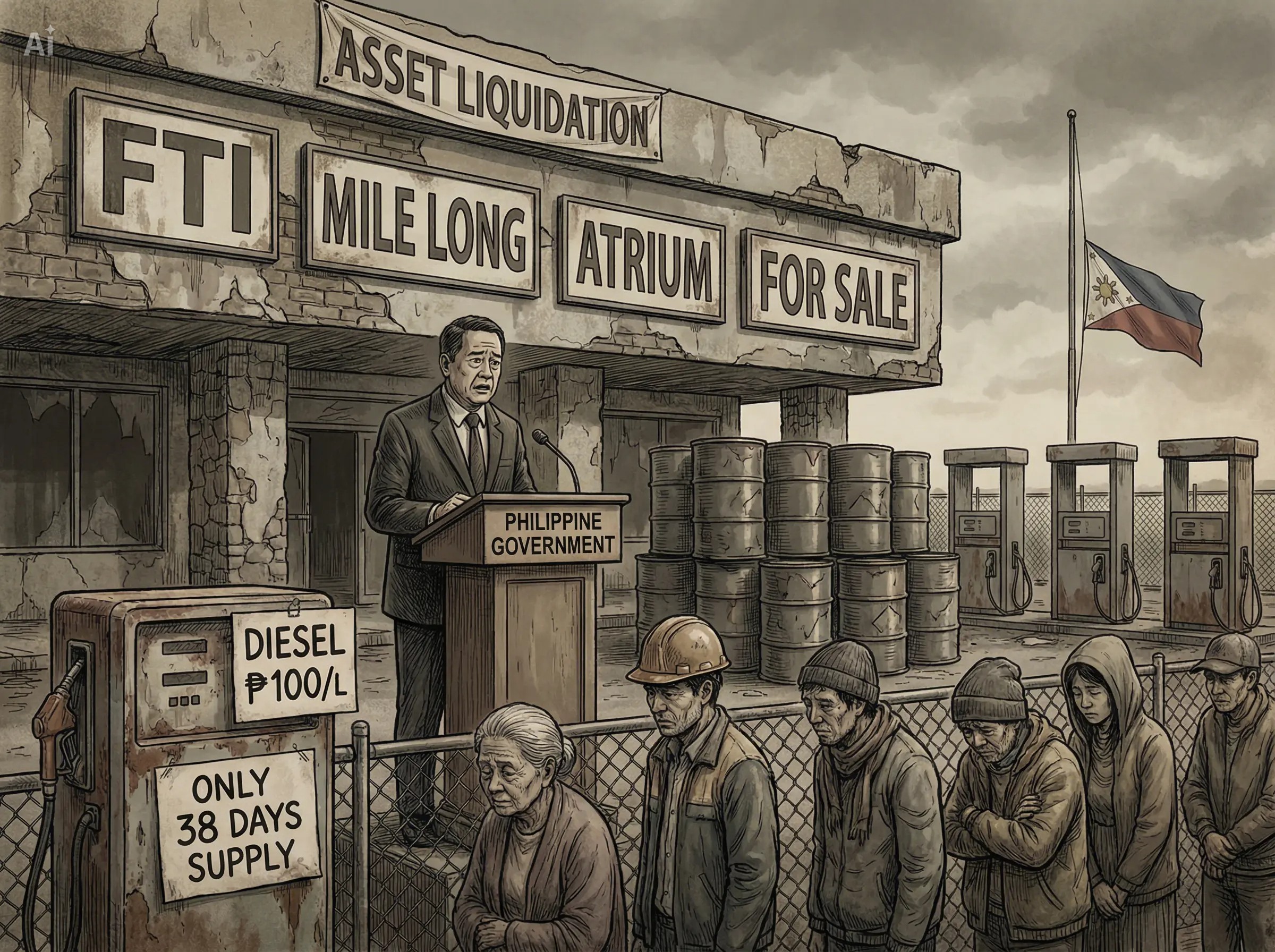
As this publication has documented, the administration's unpreparedness ran far deeper than a single press briefing. The country's fuel buffer had already eroded from nearly two months of supply to just 38 days before the emergency declaration. The government is now rushing to sell prime public assets — the Atrium of Makati, the Mile Long Complex, and portions of the FTI estate in Taguig — to fund the emergency oil procurement that should have been in place long before any crisis hit. Read: Selling the Silver: Marcos Is Liquidating Public Assets to Fix a Crisis He Never Prepared For.
The energy emergency did not arrive without warning. It arrived after years of inadequate preparation and, in its final days, after a Palace spokesperson told everyone it wasn't coming.
Meanwhile, as this publication also noted, neighboring governments were already sealing concrete supply deals — with Thailand securing Russian crude, Vietnam slashing petroleum import taxes to zero, and India locking in purchases under a US waiver — while the Philippines was still "slowly locking in offers" according to the DOE. Read: While Marcos Counts Sardines, Asian Leaders Are Closing Deals.
And when the energy crisis finally forced the administration's hand, it turned toward an unlikely partner: the Chinese Embassy in Manila, with both sides signaling openness to resuming joint oil and gas exploration in the South China Sea — the same embassy Philippine senators had called a "bad guest" just weeks prior. Read: DOE Meets With Chinese Embassy in Manila Amid Energy Crisis and South China Sea Oil Talks.
Accountability Without Apology
No one in the Palace has been asked to account for the March 23 statement. Castro has not been asked to explain the gap between what she said and what the President signed the following day. The administration has treated the contradiction as if it simply does not exist.
That silence is its own kind of answer.
In a government that consistently prioritizes the appearance of control over honest communication with its citizens, the Claire Castro episode is not an outlier. It is a window into how Malacañang operates when the truth is inconvenient. And until there is accountability for that kind of messaging — not just embarrassment, but actual accountability — Filipinos have every reason to treat the next Palace reassurance with exactly the skepticism it deserves.
Sources: Philstar, Inquirer, Rappler, GMA News, Al Jazeera, Fortune, Presidential Communications Office