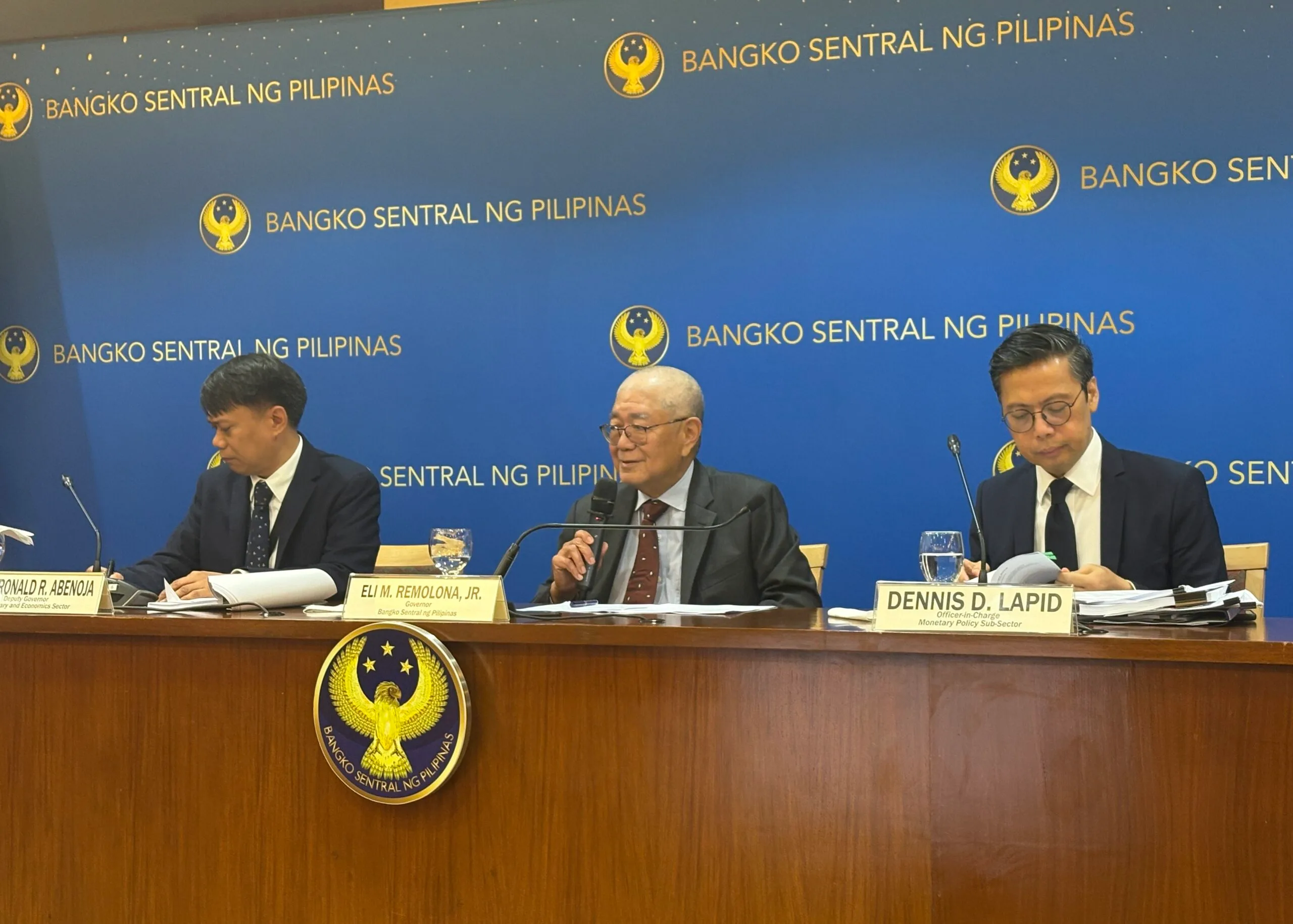

The slowdown beat the central bank's own forecast, but with year-to-date inflation already breaching the official ceiling, policymakers face a difficult call on interest rates.
Philippine headline inflation slowed to 6.8% in May from 7.2% in April, driven mainly by easing transport and food prices, the Philippine Statistics Authority (PSA) reported on June 5. The deceleration came in below the Bangko Sentral ng Pilipinas' (BSP) own forecast range of 7.1% to 7.9% for the month — but inflation remained well above the government's 2-4% target band and near its highest levels in more than three years.
National Statistician and PSA chief Claire Dennis Mapa attributed the slowdown chiefly to transport. "Ang pangunahing dahilan ng mas mababang antas ng inflation nitong Mayo 2026 kumpara noong Abril 2026 ay ang mas mabagal na pagtaas ng presyo ng Transport na may 16.2% inflation rate," Mapa said at a briefing — the main reason for the lower May rate was the slower increase in transport prices.
What drove the numbers
Transport inflation eased to 16.2% in May from 21.4% in April following several rounds of fuel price rollbacks, and the PSA said the transport sector alone accounted for 70.3% of the overall deceleration during the month. Food inflation slowed to 5.7% from 6.0%, while inflation for housing, water, electricity, gas and other fuels decelerated to 7.8% from 8.2% after the government suspended excise taxes on kerosene and cooking gas, according to Philstar.com.
Despite the monthly improvement, the pressure on household budgets remains acute. Average inflation from January to May stood at 4.5%, already exceeding the government's 2-4% target for the year-to-date period. The PSA also flagged that energy-related pressures linked to the conflict in the Middle East continue to weigh on prices, tempering the case that the worst has passed.
The rate dilemma
The print lands days before the BSP's Monetary Board meets on June 18 to decide on its key policy rate. The central bank had earlier warned that higher food prices and peso depreciation could put upward pressure on inflation, and BSP Governor Eli Remolona signaled last month that the board was weighing a further rate hike — a stance that reflects how far above target inflation has run. A softer-than-expected May reading complicates that calculus: it gives policymakers room to argue price pressures are cresting, even as a year-to-date average above the ceiling and persistent energy risks argue for caution.
The decision carries real stakes for an economy already under strain. First-quarter GDP growth slowed to a post-pandemic low of 2.8% — dragged in part by a sharp contraction in public works spending amid the flood control corruption crackdown — and higher borrowing costs would add to the burden on consumers and businesses. National government debt, meanwhile, has climbed to record levels, pushing the debt-to-GDP ratio to a 21-year high and leaving little fiscal space to cushion households from elevated prices.
Context
Inflation has stayed above the government's target band for much of 2026, peaking at 7.2% in April — the highest in three years — before May's modest retreat. The trajectory leaves the BSP balancing two risks: cutting too slowly and choking an already-weak economy, or easing prematurely and letting inflation re-accelerate if fuel and food shocks return. The June 18 meeting will be the clearest near-term signal of which risk the central bank judges to be greater.
Sources
- Kristine Daguno-Bersamina, "Inflation slows to 6.8% in May 2026 amid easing transport, food costs," Philstar.com, June 5, 2026 — link
- "Inflation eases to 6.8% in May 2026 amid slower rise in fuel costs," Rappler, June 5, 2026 — link
- "BSP projects May inflation at 7.1% to 7.9% amid food, forex pressures," Philstar.com, May 30, 2026 — link
- Consumer Price Index and Inflation Rate, Philippine Statistics Authority — link