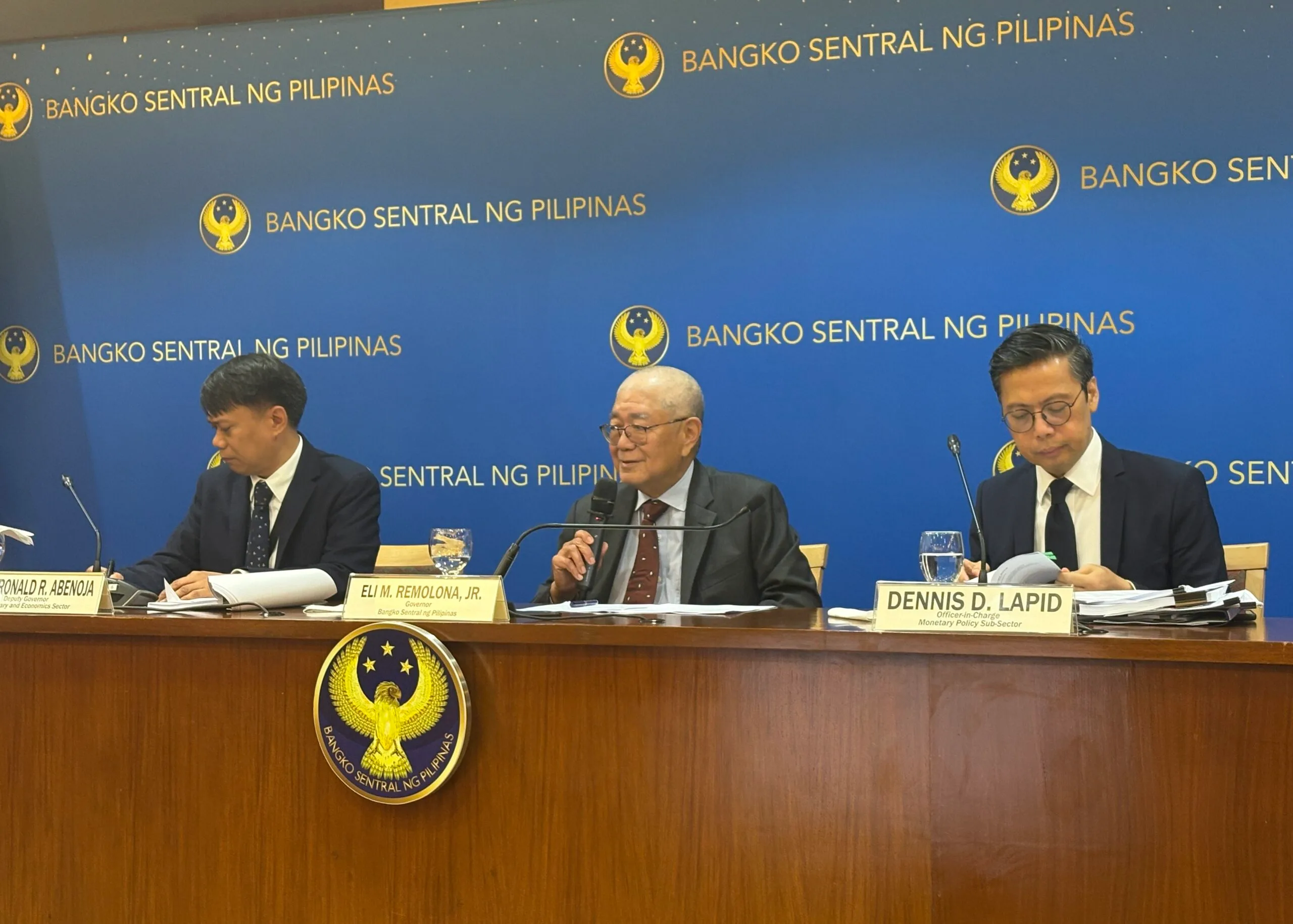

The central bank lifted its benchmark rate for a second straight meeting and warned it is "prepared to take further monetary action," even as it conceded inflation will likely average above 6% this year.
The Bangko Sentral ng Pilipinas (BSP) raised its key policy rate by 25 basis points to 4.75% at its June 18, 2026 meeting, citing "strong inflationary pressures" amid high global oil and fertilizer prices, according to the central bank and as reported by GMA News and the Daily Tribune. The decision tightens borrowing costs for households and businesses for a second consecutive policy meeting, and the central bank simultaneously raised its 2026 average inflation forecast to 6.4% from the 6.3% it projected at its previous meeting — well above the government's 2–4% target band.
The decision and the numbers
With the 25-basis-point increase, the BSP's main policy rate now stands at 4.75%, while interest rates on the overnight deposit and lending facilities were adjusted to 4.25% and 5.25%, respectively, according to reporting on the Monetary Board's decision. BSP Governor and Monetary Board Chairman Eli Remolona Jr. said the move was meant to anchor expectations: "With this policy action, we can help keep inflation expectations anchored and mitigate the risk of second-round effects," he said, adding, "We are prepared to take further monetary action to ensure inflation returns to the 3 percent target."
Remolona attributed the persistent price pressures to global supply shocks stemming from the conflict in the Middle East. The hike followed weeks of signaling: in late May, Remolona said the Monetary Board was "considering" tightening, and several banks — including Deutsche Bank, HSBC, Maybank, and Nomura — had flagged the risk of continued hikes after core inflation, which strips out volatile food and energy prices, climbed to 4.1% in May, its fastest pace since December 2023. Headline inflation had eased to 6.8% in May from a three-year high of 7.2% in April, but remained far above target.
Market reaction
Equity investors read the decision as a negative for stocks. The benchmark Philippine Stock Exchange index (PSEi) lost 18.31 points, or 0.30%, to close at 6,135.35 on June 19, while the broader All Shares index shed 12.64 points, or 0.37%, to 3,380.77, according to GMA News. "The local bourse ended lower following the BSP's 25 bps rate hike, as expectations of higher fixed-income yields reduced the appeal of equities," Regina Capital Development Corp. head of sales Luis Limlingan said in a message quoted by the outlet.
Nearly all sectoral indices closed in negative territory, with the mining and oil sub-index falling the most at 3.76%, followed by services (down 0.84%) and holding firms (down 0.80%). More than 1.321 billion shares worth ₱11.175 billion changed hands, with decliners leading advancers 111 to 81.
Context
The June hike marks an aggressive pivot for a central bank that spent much of the prior easing cycle cutting rates. The reversal has been driven almost entirely by an external oil shock: with the Philippines heavily dependent on imported fuel, the Middle East conflict has fed through to transport, food, and production costs, eroding the buffers — overseas remittances and business-process-outsourcing revenues — that normally cushion the economy. Crude has traded volatile around $77 a barrel amid disruptions to shipping through the Strait of Hormuz, a chokepoint that in peacetime carries roughly a fifth of global oil supply.
The tightening also lands at an awkward moment for growth. First-quarter 2026 GDP expanded just 2.8% year-on-year — among the weakest readings since the pandemic — and economists expect second-quarter growth to slow further as the oil shock bites and as the flood control corruption crackdown continues to freeze government infrastructure disbursements. Higher interest rates, while aimed at taming inflation, raise the cost of credit for consumers and firms and add to the government's debt-servicing bill at a time when the fiscal deficit is already under strain. The BSP's own admission that it may hike again signals that, in its assessment, the inflation fight is not yet won.
Sources
- GMA News (Jon Viktor D. Cabuenas) — "PSEi falls as market digests BSP's latest rate hike" (June 19, 2026): https://www.gmanetwork.com/news/money/economy/992085/psei-market-bsp-rate-hike/story/
- Daily Tribune — "BSP hikes rates again amid Mideast inflation risks" (June 18, 2026): https://tribune.net.ph/2026/06/18/bsp-hikes-rates-again-amid-mideast-inflation-risks
- BusinessWorld — "Poll: BSP poised for 25-bp rate hike" (June 15, 2026): https://bworldonline.com/top-stories/2026/06/15/756574/poll-bsp-poised-for-25-bp-rate-hike/