
Philippines Drops to 59th in Global Governance Index, Scoring Worst on Ethical Leadership and Implementation
The Chandler Good Government Index placed the Philippines 59th out of 133 countries, behind Thailand, Vietnam, Indonesia, and Malaysia — with experts blaming the flood control corruption scandal and worsening debt for the decline.
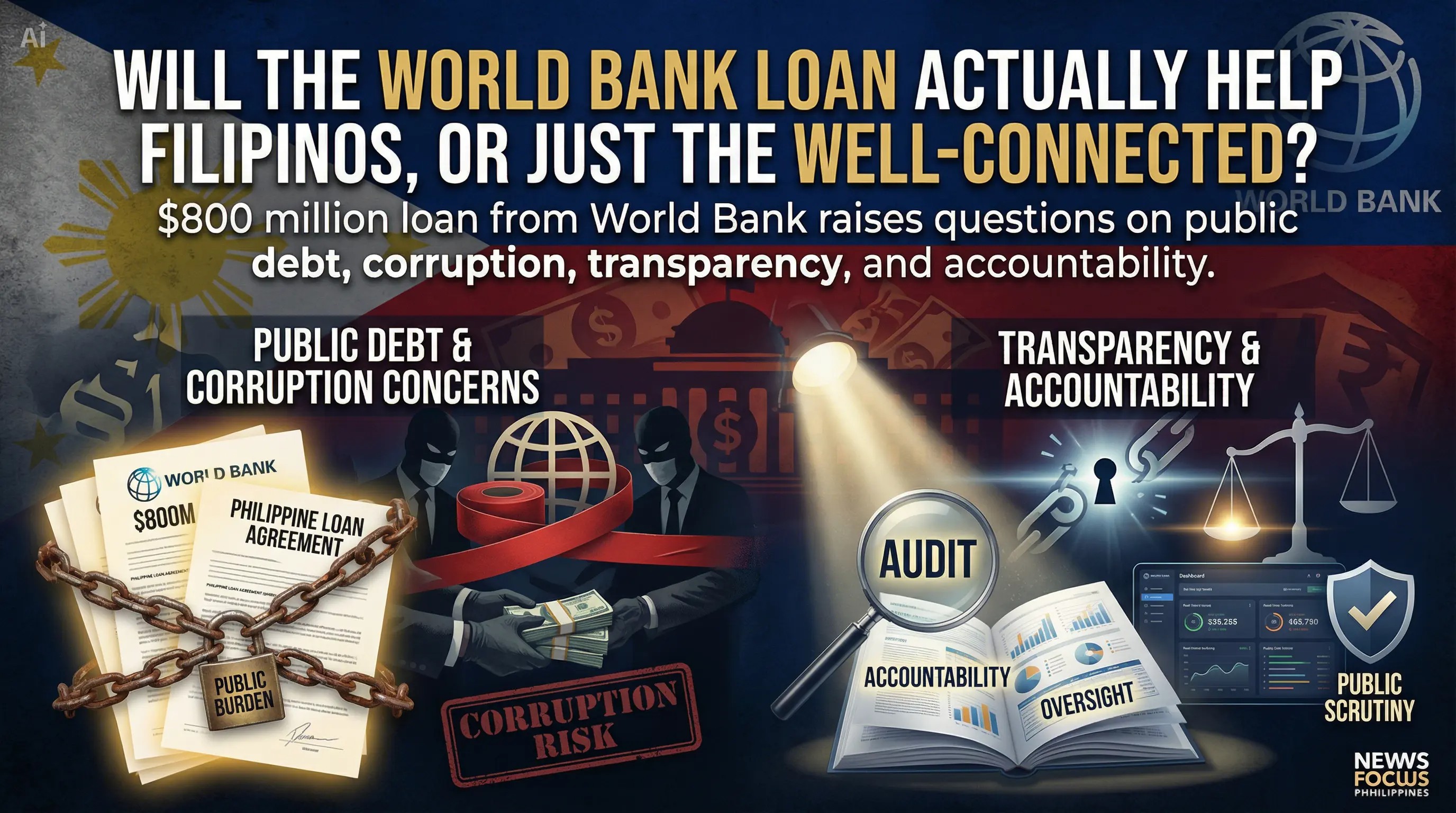
The Philippines fell four places in a major international governance benchmark in 2026, ranking 59th out of 133 countries in the Chandler Good Government Index (CGGI) — a result analysts attribute to the lingering fallout from last year's flood control corruption scandal, mounting public debt, and the increasing politicization of state institutions.
The CGGI, published by the Singapore-based Chandler Institute of Governance, scored the Philippines at 0.533 this year. That is slightly higher than its 2025 score of 0.523, but the expansion of the index from 120 to 133 countries pushed the country's relative standing down from 55th to 59th place, according to BusinessWorld, which reported on the index on May 18, 2026.
Where the Philippines fell short
The CGGI assesses governance across seven pillars: leadership and foresight, strong institutions, robust laws and policies, financial stewardship, attractive marketplace, helping people rise, and global influence and reputation. Countries are scored from zero (lowest) to one (highest) per pillar.
Among the Philippines' weakest scores:
- Implementation (under Strong Institutions): 0.17 — placing it 120th globally
- Ethical Leadership (under Leadership and Foresight): 0.25 — placing it 92nd globally
- Rule of Law (under Robust Laws and Policies): 0.38 — placing it 90th globally
- Budget Surplus (under Financial Stewardship): 0.25 — placing it 95th globally
- Environmental Performance: 0.17 — placing it 114th globally
- Non-Discrimination: 0.23 — placing it 102nd globally
- Passport Strength: 0.20 — placing it 100th globally
- Property Rights: 0.30 — placing it 106th globally
The Philippines' score for global influence and reputation — a pillar that captures international diplomatic standing, trade openness, and perceived rule of law — was just 0.36.
Singapore topped the global rankings, followed by Norway, Denmark, Finland, and Sweden. In Southeast Asia alone, the Philippines ranked behind Singapore, Malaysia (40th), Indonesia (48th), Vietnam (49th), and Thailand (58th). It was ahead only of Myanmar-tier economies such as Mongolia (71st), Cambodia (91st), and Laos (98th).
Analysts: corruption, debt, and institutional erosion are to blame
Filomeno Sta. Ana III, coordinator of Action for Economic Reforms, said the ranking was unsurprising. "This is driven by the massive corruption that happened, the political weaponization of institutions, the policy drift and incoherence, the worsening debt, and the growth slowdown," he told BusinessWorld via Viber.
Ranjit Singh Rye, an assistant professor at the University of the Philippines, flagged the country's 0.36 score for global influence and reputation as a particular red flag for investors. "It suggests that despite our economic potential, the international community still perceives significant risks regarding our rule of law and long-term stability," he said.
He also pointed to a stubborn implementation gap. "We have the laws and policies in place, but the gap between policy on paper and implementation on the ground remains our greatest hurdle," Rye said.
Emy Ruth Gianan, an economics professor at the Polytechnic University of the Philippines, offered a structural explanation. "This could mean that over time, the reforms we planted before have been reversed, especially those after the pandemic lockdown, or have not taken full effect since they do not translate to long-term positive change," she said.
What the government has said
As of the time of publication, the Marcos administration has not issued a formal response to the 2026 CGGI results. The Department of Budget and Management and the Presidential Communications Office did not respond to requests for comment from BusinessWorld.
Context
The CGGI decline coincides with a period of sustained economic and governance stress in the Philippines. National government debt reached 65.2% of GDP in the first quarter of 2026 — approaching the highest level in 20 years, when it hit 65.7% in 2005, according to IBON Foundation executive director Jose Enrique Africa. GDP growth in Q1 2026 was just 2.8%, the slowest in five years.
The flood control corruption scandal — which implicated government officials, lawmakers, and private contractors in substandard or nonexistent projects — triggered a cascade of investigations, criminal complaints, and spending freezes beginning in mid-2025. The Commission on Audit identified at least ₱389.6 million in suspicious flood control projects in Bulacan alone, and the Anti-Money Laundering Council had frozen more than ₱21.8 billion in assets as of April 30, 2026.
The index result adds to a pattern of declining governance signals: the Philippines' implementation score of 0.17 places it near the bottom globally — a sign that even when policies exist on paper, the machinery to deliver them has eroded.
Sources:
- Beatriz Marie D. Cruz, "Philippines ranks four spots lower in global good governance index," BusinessWorld Online, May 18, 2026. https://www.bworldonline.com/top-stories/2026/05/18/750265/philippines-ranks-four-spots-lower-in-global-good-governance-index/
- Chandler Institute of Governance, 2026 Chandler Good Government Index. https://www.chandlergovernanceinstitute.org/
- Justine Irish D. Tabile, "Infrastructure spending down 48% as corruption mess slows disbursements," BusinessWorld Online, May 18, 2026. https://www.bworldonline.com/top-stories/2026/05/18/750268/infrastructure-spending-down-48-as-corruption-mess-slows-disbursements/