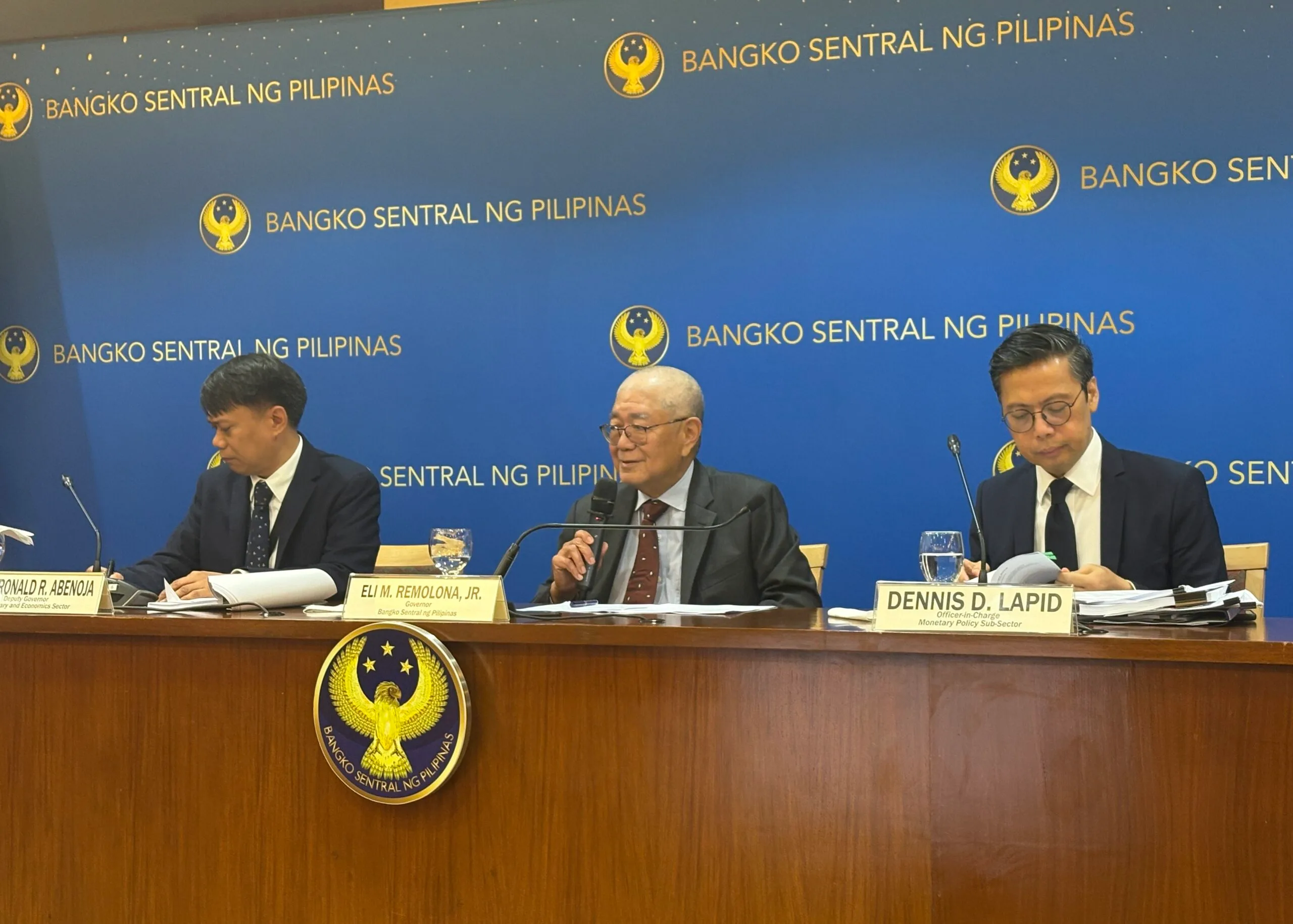

Cash remittances from overseas Filipino workers grew at their slowest annual pace in more than four years in June, even as the monthly dollar total reached a six-month high, according to Bangko Sentral ng Pilipinas (BSP) data reported by BusinessWorld on Aug. 18. OFWs sent home $3.039 billion in cash remittances in June, up just 1.7% from $2.987 billion a year earlier — the weakest year-on-year growth since the 1.3% recorded in February 2022.
"Cash remittances reached $3.04 billion in June 2026, the highest monthly cash remittance level recorded in the first half of 2026," the central bank said in the statement cited by BusinessWorld. Month-on-month, the June figure was up 12.02% from May's $2.713 billion. Personal remittances, a broader measure that includes in-kind transfers and informal channels, rose 1.8% year-on-year to $3.388 billion.
Middle East conflict and inflation cited as drags
Land-based OFWs accounted for the bulk of cash remittances, sending $2.48 billion in June, up 1.8% from a year earlier, while sea-based workers sent $560 million, up 1.4%. Analysts told BusinessWorld the slowdown reflects moderation rather than a structural problem. "The slowdown in remittance growth to 1.7% in June is more a story of moderation than a cause for concern," said Jonathan L. Ravelas, senior adviser at Reyes Tacandong & Co., citing "a combination of base effects, softer economic conditions in some host countries, geopolitical uncertainties in parts of the Middle East, and timing-related factors."
Robert Dan J. Roces, vice president and group economist at SM Investments Corp., said remittances continue to underpin household spending despite the slower growth: "Even at a modest 1.7% growth, remittances provide a reliable income buffer for OFW families and help sustain consumption across food, retail, housing and other services." A separate Philstar stock commentary published the same day cautioned that peso depreciation cushions the local-currency value of OFW income, but inflation running above 6% erodes real purchasing power, meaning "the consumption support from remittances is becoming less powerful than in prior years."
June headline inflation stood at 6.4%, above the BSP's 2%-4% target band for a fourth consecutive month, bringing first-half average inflation to 4.8%, according to BusinessWorld's report. Earlier reporting from the Philippine Statistics Authority, which Pulpulitiko covered in its Aug. 5 report on the July inflation reading, showed prices had begun to cool from an April three-year high but remained elevated.
First-half remittances still rising
For the first half of 2026, cash remittances climbed 2.4% year-on-year to $17.149 billion from $16.753 billion, per BSP data. The United States accounted for 39.4% of total inflows in the period, followed by Singapore (7.2%), Saudi Arabia (6.3%), Japan (5.1%), the United Kingdom (4.8%), and the United Arab Emirates (4.4%) — a reminder that a meaningful share of remittance-generating labor migration flows through Middle East host economies exposed to the region's ongoing conflict. The BSP is forecasting cash remittances to rise an annual 2.7% to $36.6 billion for full-year 2026, slower than 2025's 3.3% growth to $35.6 billion.
Context: External accounts under pressure
The remittance slowdown compounds broader pressure on the Philippines' external accounts. Pulpulitiko has previously reported that the peso has at times weakened toward the ₱60-per-dollar level and that the government's 2027 borrowing plan would push national debt above ₱21.48 trillion. BusinessWorld's report noted that slower remittance growth reduces the "secondary-income buffer" that helps offset the country's oil import bill — a concern that predates but is compounded by the Middle East conflict. The BSP has not announced any policy response specific to the remittance data as of this writing; a separate BusinessWorld report the same day noted the central bank said it retains room for further monetary action "amid looming inflation risks."
Sources
- "Cash remittances up 1.7% in June, slowest in over 4 years," BusinessWorld, Aug. 18, 2026
- "Remittance growth slows, household buffer thins," The Philippine Star
- "Remittances to Philippines dip to 9-month low; Middle East conflict may affect rest of 2026," Khaleej Times
- "BSP says it can still take monetary action amid looming inflation risks," BusinessWorld