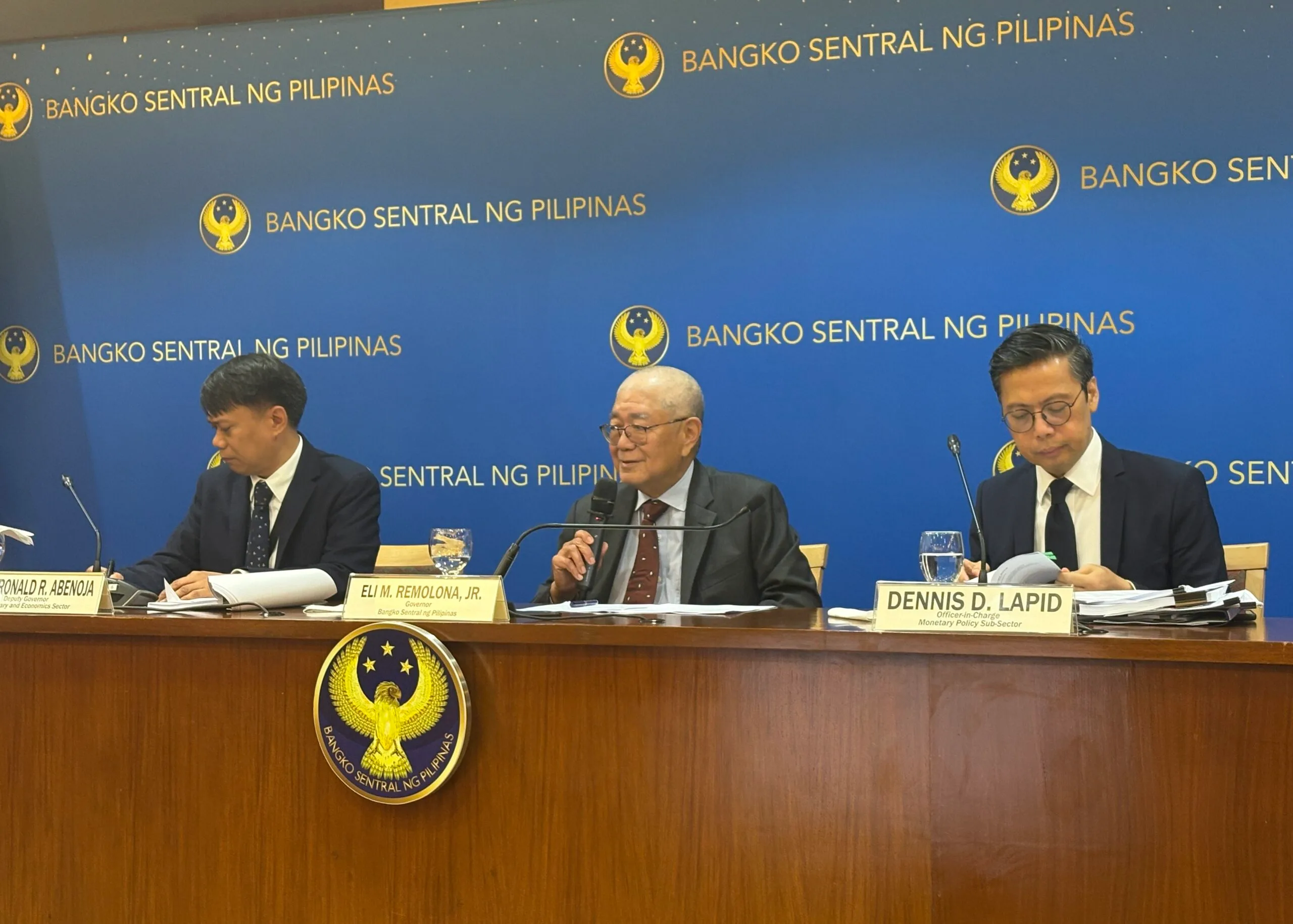

The Bangko Sentral ng Pilipinas' balance of payments (BOP) — the running tally of money flowing into and out of the country — posted a cumulative deficit of $5.9 billion for the first eight months of 2026, a gap that already exceeds the government's full-year shortfall for 2025, according to central bank data reported by the Philippine Daily Inquirer and the Daily Tribune on Sept. 20 and 21, respectively.
The August figure alone, a $596-million deficit, actually narrowed from July's $1.5-billion gap — a headline some outlets ran with as relief. But narrower is not the same as good: the same month last year posted a $359-million surplus, meaning August 2026 still represents a reversal, not a recovery. The cumulative eight-month number tells the less flattering story: BusinessMirror reported that the year-to-date total has already blown past the government's entire full-year 2025 balance-of-payments gap, citing BSP figures — with four months of 2026 still to go.
The BSP now projects a full-year 2026 deficit of $10.7 billion, equivalent to 2.1% of gross domestic product, according to the Inquirer's report.
What's driving the shortfall, per the Inquirer: a persistent trade deficit worsened by elevated global crude oil prices, foreign portfolio investment outflows tied to global financial market volatility, and the national government's own foreign debt payments — the same debt service load that has pushed the Philippines' outstanding debt to a record ₱19.39 trillion, as Pulpulitiko has reported. Partly offsetting the drain: growing remittances from overseas Filipino workers, business process outsourcing revenues, tourism earnings and what the Inquirer described as "resilient" foreign direct investment.
Gross international reserves (GIR) — the country's foreign-currency cushion — stood at $104.8 billion as of end-August, up slightly from $103.3 billion in July, enough to cover 6.6 months of imports and 3.3 times the country's short-term external debt obligations, per BSP figures cited by the Inquirer. Those buffers remain comfortably above international benchmarks, for now.
Michael Ricafort, chief economist at Rizal Commercial Banking Corp., told the Inquirer that markets "would anticipate developments related to developments on the war in the Middle East" in gauging where the BOP goes from here — a reminder that a chunk of the country's external position rests on a conflict thousands of kilometers away and entirely outside Manila's control.
Neither the Tribune nor the Inquirer report cited an on-record BSP statement addressing what, if anything, the central bank plans to do to narrow the trade gap or curb the portfolio outflows, beyond noting the offsetting inflows. That leaves the country's improving August headline resting mostly on remittances and tourism carrying the load — not on the trade or investment picture actually turning around.
Analysis: "Deficit narrows" and "deficit already worse than all of last year" are not contradictory — they describe different reporting periods — but running the first without the second, as some coverage did, obscures a worsening trend. Four months remain before the books close on 2026, and the BSP's own $10.7-billion full-year projection suggests officials do not expect August's reprieve to hold.
Context
The widening external gap comes as the Department of Finance works to revive a stalled, IMF-backed debt-forecasting tool nearly two years after a staff shake-up derailed it, as Pulpulitiko reported this week — a reminder that the government's own capacity to model and manage these numbers has been under strain even as the numbers themselves worsen. National debt hit a record ₱19.39 trillion as of the most recent tally.
Sources
- "BOP deficit narrowed in August despite Middle East woes" — Philippine Daily Inquirer, Ian Nicolas P. Cigaral, Sept. 21, 2026
- "BoP deficit widens to $5.9B in August" — Daily Tribune, Toby Magsaysay, Sept. 20, 2026
- "$5.9-B 8-mo BOP deficit exceeds entire '25 gap" — BusinessMirror, Sept. 21, 2026